
 Umar Farooq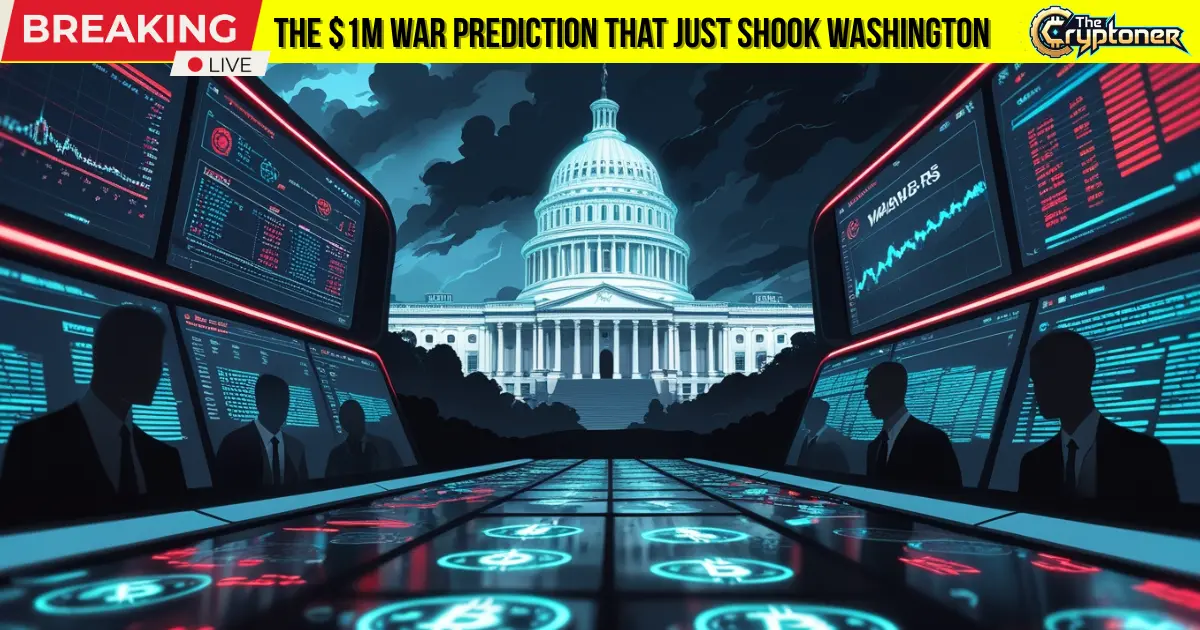
Someone Made $1 Million Betting on the Iran War — Now Congress Is Furious and Fighting Back
It took ten days. Ten days from the moment US-Israeli airstrikes hit Iran to the moment Congress decided it had seen enough.
And what Congress saw was shocking — hundreds of millions of dollars flowing through prediction market platforms as bombs were literally falling. Traders betting on the timing of military strikes. Six anonymous wallets quietly pocketing over $1 million by correctly predicting an attack on Iran — hours before the first explosion lit up Tehran’s skyline.
Now Washington is fighting back — with one of the most dramatically named bills in recent political history.
Meet the DEATH BETS Act
Representative Mike Levin and Senator Adam Schiff unveiled the Discouraging Exploitative Assassination, Tragedy, and Harm Betting in Event Trading Systems Act — known as the DEATH BETS Act — on March 10. The bicameral proposal would amend the Commodity Exchange Act to prevent any entity registered with the Commodity Futures Trading Commission from listing event contracts that reference terrorism, war, assassination, or a person’s death.
Yes, that’s the real name. And yes, the acronym was absolutely intentional.
Senator Schiff, a member of the Senate Agriculture Committee that oversees the CFTC, is pressing the proposed ban as the agency’s new rulemaking takes shape — putting him on a direct collision course with CFTC Chair Mike Selig’s deregulatory agenda.
In plain English — Schiff isn’t asking regulators to try harder. He’s trying to take the decision completely out of their hands.
What Actually Triggered This Bill
To understand why Congress moved so fast, you need to understand what happened in the days after the Iran strikes.
On February 28, US-Israeli airstrikes hit Iran, and prediction markets absorbed the shock in real time — processing hundreds of millions of dollars in wagers on the trajectory of the conflict.
The numbers that came out afterward were jaw-dropping.
Polymarket processed $529 million in Iran-related volume. A class-action lawsuit was filed against Kalshi over its “death carveout.” And one nuclear detonation market was quietly deleted before anyone could screenshot it.
But the detail that truly outraged lawmakers was far more specific. Six Polymarket traders netted $1 million by accurately betting on the US strike against Iran. The six wallets were all created in February and placed all their bets on contracts predicting the timing of a potential US attack — with several shares purchased only hours before the first reported explosions in Iran’s capital.
Six brand-new wallets. Created weeks before the strike. Betting specifically on when it would happen. Winning over a million dollars. Hours before the bombs fell.
Was it insider trading? Was it classified intelligence being used to profit from war? Nobody has proven it yet. But the pattern was impossible to ignore — and lawmakers noticed immediately.
What the DEATH BETS Act Actually Does
Here’s where the legislation gets really interesting — and why it’s more significant than just another political press release.
Right now, the CFTC already has the power to ban war and assassination contracts. But there’s a catch. Current law leaves the CFTC with discretion to decide whether certain war, terrorism, or assassination contracts are contrary to the public interest. The agency has to actively choose to block them — and under the Trump administration’s deregulatory CFTC chair, that was never going to happen.
Schiff’s bill would strip the agency of that discretion entirely. It would prohibit any CFTC-registered exchange from listing contracts that involve, relate to, or reference terrorism, assassination, war, or an individual’s death — extending even to contracts that could be “construed as correlating closely” to a person’s death, a notably broad standard.
Think of it like the difference between a speed limit and a roadblock. Right now, the CFTC can choose to enforce speed limits on these contracts. The DEATH BETS Act would build a wall across the road entirely.
The bill would codify a blanket ban on any contracts regarding war, terrorism, and death — and comes directly in response to instances where substantial money was wagered on military actions and other tragic events, including over half a billion dollars wagered on the timing of US military strikes on Iran alone.
The Contracts That Made Everyone Uncomfortable
The Iran strikes were the final straw — but they weren’t the only controversial markets that had been quietly building pressure for months.
Earlier this year, Schiff led a group of Democratic senators in a letter urging the CFTC to reaffirm that markets resolving on or closely correlated with a person’s death should not be permitted. The letter cited a range of controversial markets that had appeared on prediction platforms — including bets on whether the Artemis II spacecraft might explode, whether Venezuela’s Nicolás Maduro would be removed from power, and contracts linked to Russia capturing the Ukrainian town of Myrnohad. In one instance, a trader reportedly earned more than $400,000 betting on Maduro’s removal.
And then there was the Khamenei market. A prediction contract on whether Iran’s Ali Khamenei would be “out as Supreme Leader” reached $54 million in trading volume on Kalshi before it was paused.
Fifty-four million dollars. Betting on whether a world leader would be removed from power — possibly by death. On a regulated US exchange.
The Prediction Market Industry Is Now Scrambling
For platforms like Kalshi and Polymarket, this bill could not have come at a worse moment.
Both Kalshi and Polymarket are currently pursuing valuations in the range of $20 billion. The sector spent much of 2025 constructing a credibility narrative — prediction markets as superior forecasting instruments, vindicated by their performance during the 2024 presidential election, embraced by institutions, and backed by serious capital.
The Iran week destroyed that narrative almost overnight.
The same product architecture that impressed voters when applied to elections repulsed the public when applied to war. The fact that Polymarket processed half a billion dollars in conflict-related volume while operating without US regulatory oversight made it very difficult for the platform to claim the system was working as intended.
The industry’s response was immediate and defensive. On March 10 — the same day the DEATH BETS Act was introduced — Polymarket announced a partnership with Palantir for AI-powered market monitoring. The move reads as preemptive self-regulation — a signal that the platforms intend to police themselves before Congress does it for them.
A partnership with Palantir, announced on the exact same day Congress introduced the DEATH BETS Act. That timing was not a coincidence.
Will This Bill Actually Become Law?
Here’s the honest reality check every crypto and prediction market investor needs to hear.
Because Republicans control the Senate majority and will maintain that control through at least the end of the year, it’s unlikely that Democratic initiatives make immediate headway beyond the headlines they inspire.
Schiff is a Democrat. The Senate is Republican-controlled. The Trump administration has spent the last year pushing for less regulation, not more. The DEATH BETS Act is, politically speaking, swimming upstream.
But that doesn’t mean it’s meaningless. Bills like this serve several important purposes even when they don’t immediately pass — they signal where political winds are shifting, they create pressure on regulators to act voluntarily, and they set the stage for future legislation when the political balance changes.
And Senator Blumenthal is already piling on. Senator Richard Blumenthal also introduced a separate bill targeting fraud and insider trading in prediction markets — his Prediction Markets Security and Integrity Act would additionally echo Schiff’s by banning bets on war, death, and military action.
Two Democratic senators. Two bills. Same week. The message to prediction market platforms is loud and clear — even if this legislation stalls now, the pressure is not going away.
What This Means for Crypto Investors
Prediction markets have become one of the most exciting intersections of crypto and mainstream finance. Platforms like Polymarket run on blockchain rails. Their contracts are settled in stablecoins. Their growth has been one of the defining stories of crypto in 2025 and 2026.
Any legislation that restricts what these platforms can list is ultimately a crypto story — because it affects the ecosystem that millions of users interact with through digital wallets and decentralized protocols.
If the DEATH BETS Act or any similar legislation eventually passes, it could push controversial prediction contracts offshore permanently — to unregulated platforms that Congress cannot touch. That’s exactly what happened with online poker after the 2006 Unlawful Internet Gambling Enforcement Act. Regulation didn’t kill the market. It just moved it somewhere darker and less safe.
Readmore: Crypto Bears Still Control the Market — Bitcoin Stuck Between $65K and $72K
Someone may have used classified information to bet on a war and walked away with a million dollars. Half a billion dollars flooded prediction markets while bombs were falling on Tehran. A contract betting on whether a sitting world leader would die reached $54 million in volume on a regulated US exchange.
Supporters of prediction markets argue that the platforms harness the wisdom of crowds and produce valuable forecasts. Critics counter that markets tied to death, violence, or military conflict cross ethical lines and may invite manipulation or insider trading.
Both sides make fair points. But after the Iran war markets — the optics became impossible to defend.
The DEATH BETS Act may not pass this year. But the era of betting on war and death without any political consequences is officially over.
The Wild West just got its first sheriff. Whether the sheriff has enough power to enforce the law is the question crypto and prediction market investors need to watch very carefully.
Follow thecryptoner.xyz for daily crypto regulation and policy news.